STOPERCİM / KNOWLEDGE CENTER
06 YAZI
Blog & industry notes.
Practical articles on product selection, textile care and material knowledge.
Practical articles on product selection, textile care and material knowledge.
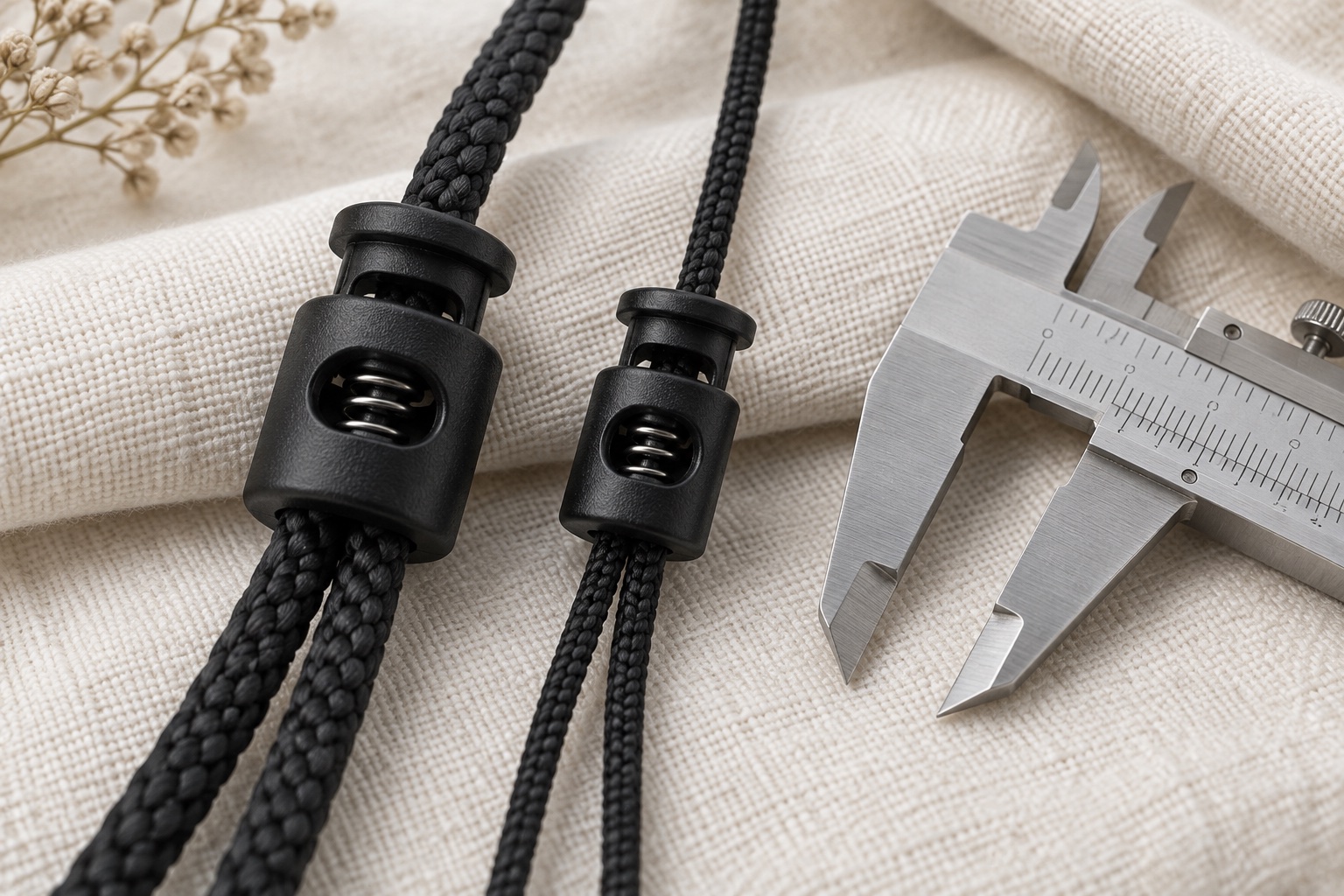 Product selection / STOPERCİM BLOG
Key points to check for size, passage and grip before purchasing.
Do not choose a stopper based on appearance alone. Determine the thickness and structure of the cord you will use and how many passages are required. Two cords with the same external appearance may behave differently because of compression and surface characteristics.
Check on a sample whether the cord passes through the opening comfortably and how the mechanism holds when released. A passage that is too tight or a cord that slips too easily indicates that compatibility should be reassessed.
Evaluate the sample not only by hand but on the textile product where it will be used. Review how the fabric, stitching and cord work together. If the product dimensions or material are unknown, ask the seller for information instead of guessing.
 Care information / STOPERCİM BLOG
Why is it important to read washing, drying and ironing symbols together?
The GINETEX care system expresses washing, bleaching, drying, ironing and professional textile care through separate symbol groups. The symbols on the label should be evaluated together.
The appearance of a product alone does not determine the correct care method. Follow the garment’s own care label; a process suitable for one fabric may not produce the same result for every component on it.
If you are developing your own textile product, evaluate care conditions together with the accessories. Obtain product information about the stopper’s suitability for the intended care conditions and check it on the finished product.
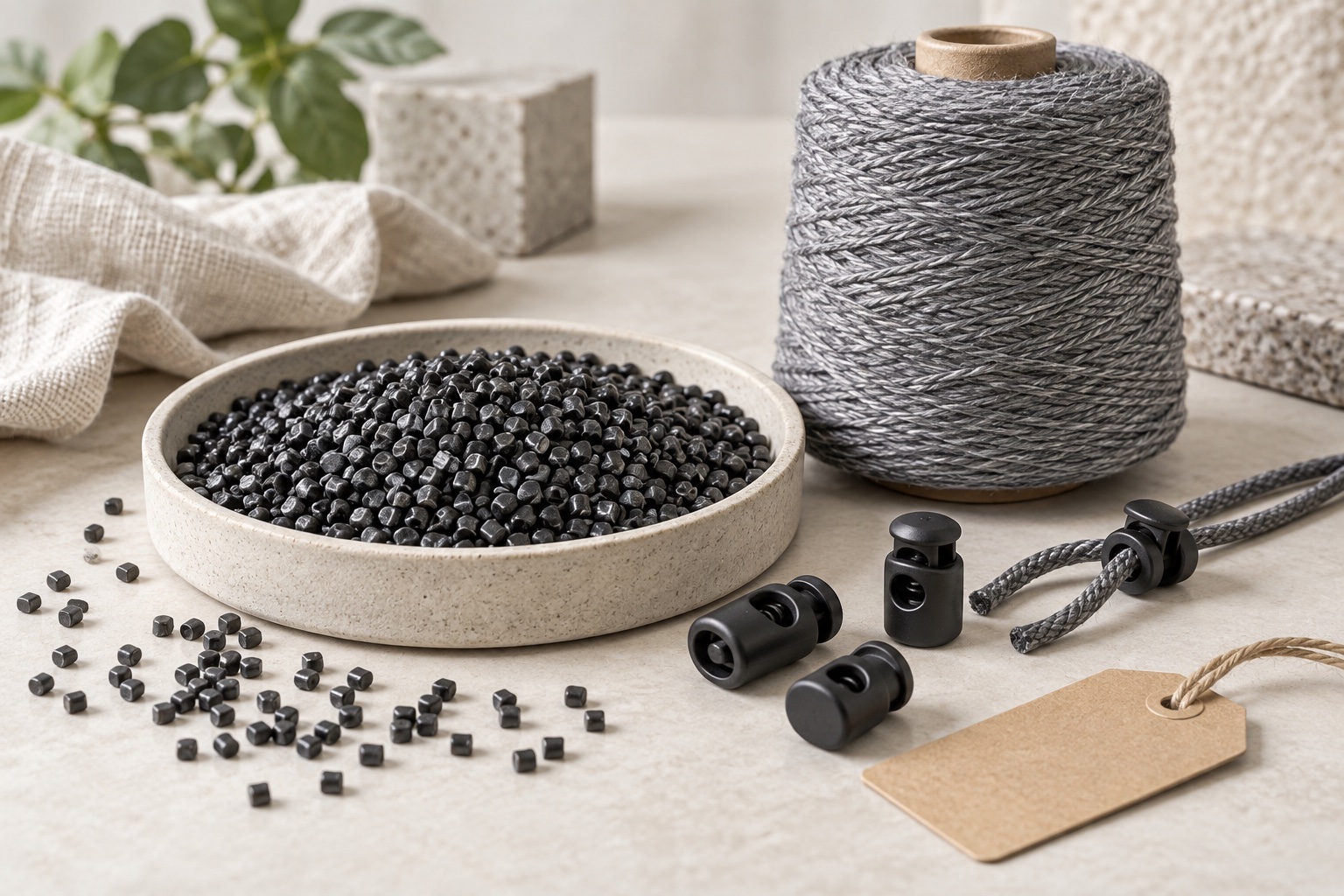 Material & traceability / STOPERCİM BLOG
Why should we check the certificate scope for recycled-content claims?
Textile Exchange defines the Global Recycled Standard as a product standard that verifies and tracks recycled raw materials throughout the supply chain. GRS uses the chain-of-custody requirements of the Content Claim Standard.
A supplier sharing a certificate does not mean every product they offer is covered by the same scope. Clarify which business, process and product the certificate applies to.
If recycled content is a purchasing criterion for you, state this clearly in your request. Ask for verifiable product information rather than relying only on color, appearance or a general environmental statement. This article does not claim that Stopercim products are GRS certified.
 Order guide / STOPERCİM BLOG
Separate pack price from unit price with a simple calculation.
When the number of products in a pack is known, divide the pack price by that number to find the cost per item. For example, dividing the price of a pack of 10 by 10 lets you compare it with a single-item option on the same basis.
Make sure the options you compare are the same in model, size, color and material. Do not assume similarly named products can be used interchangeably.
Think not only about the low unit price but also the quantity you will actually use. Include shipping and other fees where applicable, and check whether the quantity shown in the cart refers to pieces or packs before ordering.
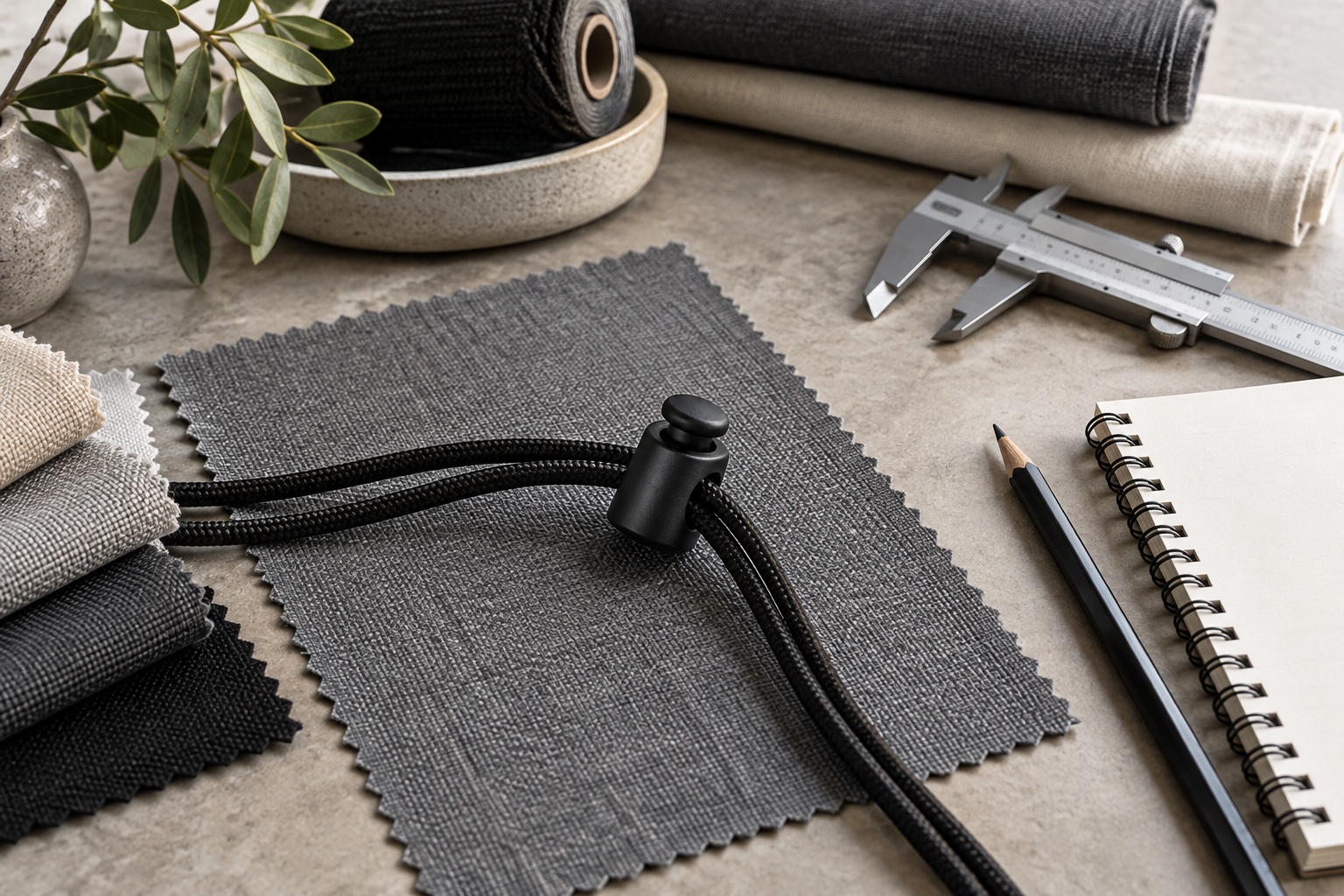 Production preparation / STOPERCİM BLOG
Create a consistent checklist before product selection.
Record the cord size, stopper opening and application method together. Note the product name or reference that identifies the sample you tested.
Evaluate how the mechanism opens and closes, how the cord moves and how the part looks on the fabric. Whenever possible, test the same part on the actual application.
Check the finished product’s care instructions together with the accessory information. A sample trial does not replace laboratory testing or a technical conformity certificate.
Keep photos, measurements and observations in the same record. Clearly identifying which sample was evaluated in later discussions reduces the chance of proceeding with the wrong model.
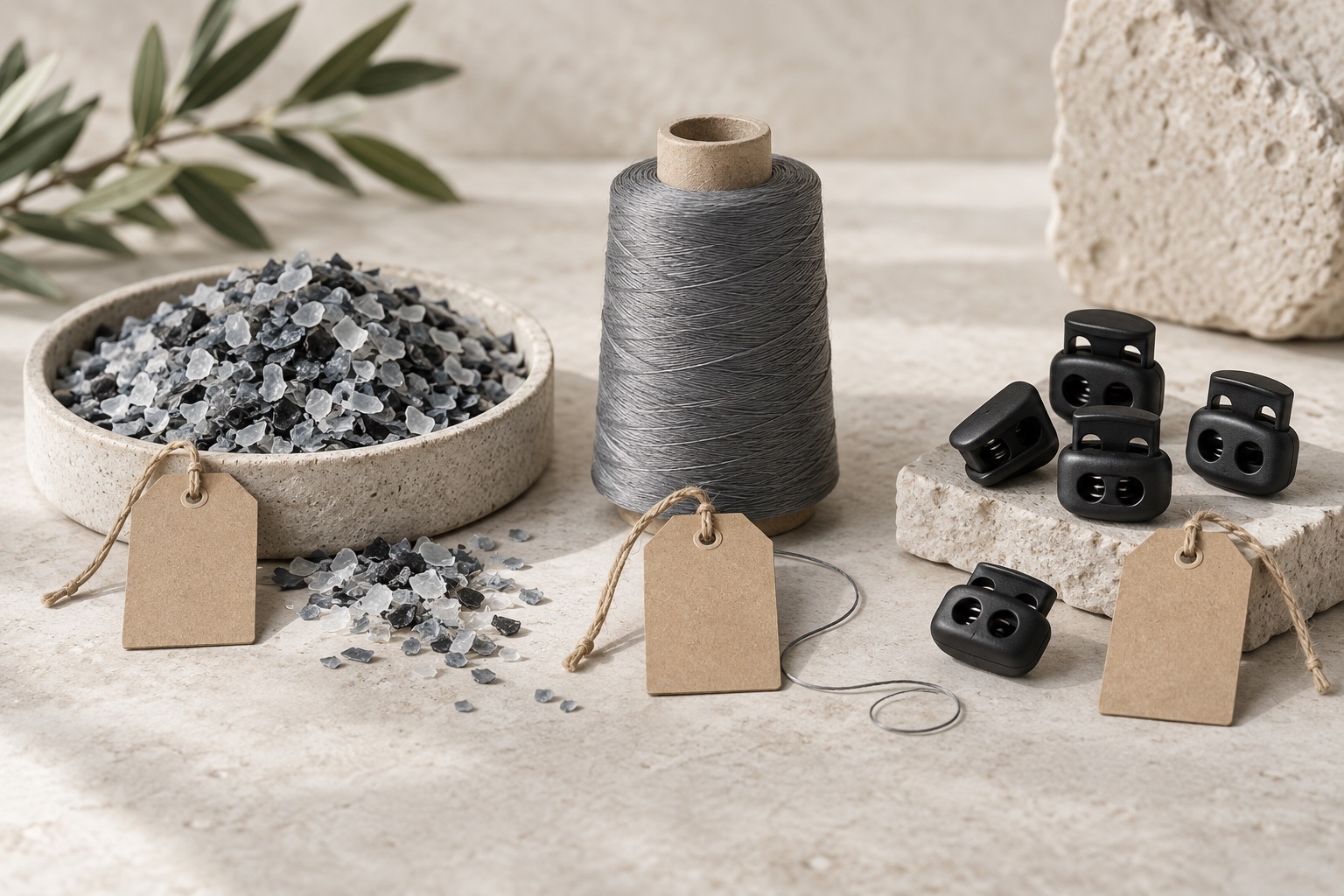 Industry information / STOPERCİM BLOG
Look beyond the standard name when evaluating material claims.
The Recycled Claim Standard is one of Textile Exchange’s standards relating to recycled materials. It addresses recycled-content claims and tracking of the material through the supply chain.
The presence of a standard name in a catalog alone does not explain product scope. Check which certificate is provided for the product you plan to purchase and whether it is valid.
Share your recycled-material requirement at the beginning of the order discussion. Evaluate marketing language separately from verified product information. This explanation is not a certification claim for products on the site.